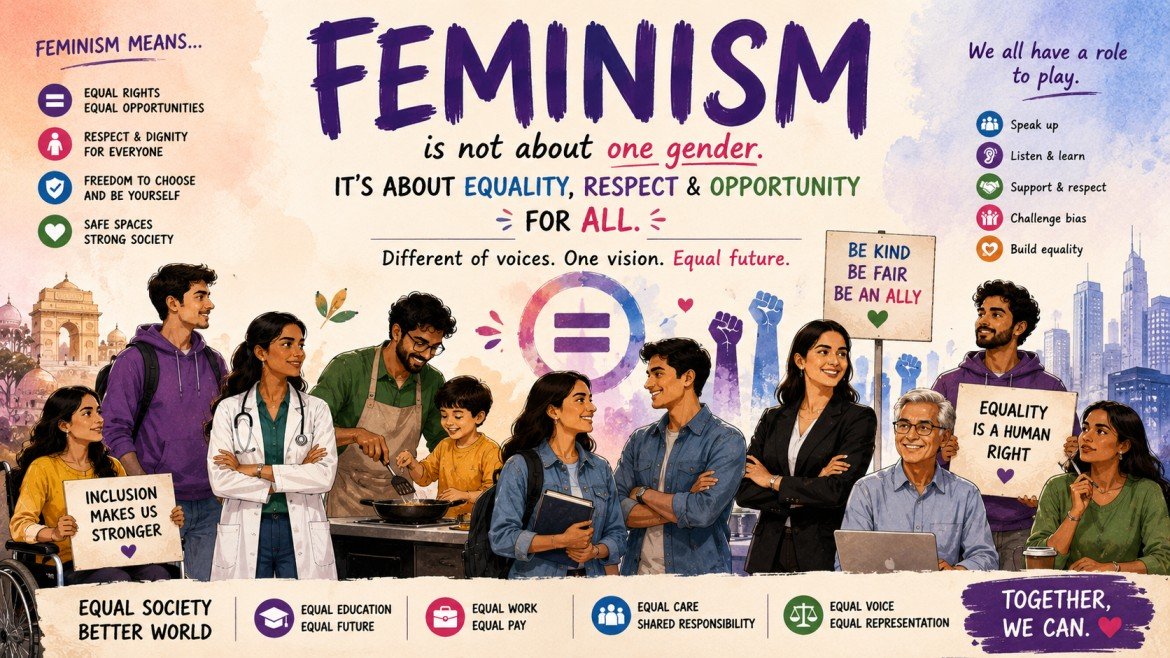
Feminism is a social, political, and cultural movement that advocates for equality of rights, opportunities, and dignity for all genders, with a primary focus on addressing the historical and ongoing inequalities faced by women and girls. Feminism believes that a person’s opportunities, choices, and rights should not be limited because of their gender.
Feminism aims to address issues such as:
- Equal access to education and employment
- Equal opportunities for career growth and leadership
- Equal pay for equal work
- Freedom to make personal choices about one’s life and body
- Protection from gender-based violence and discrimination
- Challenging harmful gender stereotypes and social expectations
What Feminism Is Not
Feminism is often misunderstood. It is not about women being superior to men or creating inequality in the opposite direction. Feminism focuses on equality and fairness, where people of all genders can participate fully in society.
Why Feminism Matters
Historically, many women around the world faced restrictions on basic rights such as education, voting, property ownership, financial independence, and participation in public life. Feminist movements have contributed to changes that expanded these rights and continue to address remaining inequalities.
Feminism and Inclusion
Modern feminism also recognizes that experiences of inequality can differ based on factors such as disability, economic background, race, culture, and social status. This perspective is often called intersectional feminism, which emphasizes that equality efforts should include diverse voices and experiences.
Feminism is often criticized, misunderstood, or even bullied
Feminism is often criticized, misunderstood, or even bullied because of a combination of social, cultural, and historical reasons. Some common reasons include:
- Misunderstanding of the Concept: Many people misunderstand feminism as “women wanting to be above men” rather than understanding it as a movement for equal rights and opportunities. Misconceptions often create negative reactions.
- Challenging Traditional Gender Roles: Feminism questions long-standing ideas about what women and men “should” do. When a movement challenges established beliefs, some people feel uncomfortable because it requires society to rethink old practices.
- Fear of Losing Privilege: Some individuals may perceive equality as a loss of their existing advantages. When systems change to become more inclusive, people who benefited from older systems may resist that change.
- Media Representation and Stereotypes: Sometimes feminism is portrayed negatively through jokes, misinformation, or extreme examples. These portrayals can influence public perception without showing the broader goals of feminism.
- Different Interpretations of Feminism: Feminism includes many different perspectives and movements. A small number of extreme voices or controversial opinions may become highly visible, causing people to judge the entire concept based on limited examples.
- Social Resistance to Change: Movements for equality throughout history—such as movements for civil rights, voting rights, and social reforms—have often faced opposition because they challenge existing power structures.
- Online Culture and Harassment: Social media has created spaces where discussions about gender can become aggressive. Feminists and critics of feminism may both face hostility when conversations become polarized.
Feminism in Indian Society
Indian feminism has its own unique context because gender inequality is influenced by factors such as tradition, caste, class, religion, education, economic status, and social expectations. It is not only about individual rights but also about transforming systems that limit participation and opportunities.
Historical Roots of Feminism in India
The roots of Indian feminism can be traced back to social reform movements in the 19th century.
- Savitribai Phule worked for girls’ education and challenged social discrimination by establishing schools for girls.
- Raja Ram Mohan Roy advocated against practices such as Sati abolition movement.
- Pandita Ramabai worked for women’s education and the upliftment of widows.
These movements laid the foundation for discussions around women’s rights, education, and social equality.
Feminism During the Freedom Movement
Women played significant roles in India’s independence struggle. Leaders such as Sarojini Naidu and many other women participated in political movements, demonstrating women’s leadership abilities beyond traditional domestic roles.
After independence, the Constitution of India adoption provided equal rights and prohibited discrimination based on gender, creating a legal foundation for gender equality.
Major Issues Addressed by Feminism in India
- Access to Education: Feminist movements have emphasized that education is a fundamental tool for empowerment. Educated women often gain greater opportunities for economic independence and decision-making.
- Economic Independence: Feminism highlights the importance of women’s participation in the workforce, equal opportunities, and recognition of unpaid care work.
- Gender-Based Violence and Safety: Issues such as domestic violence, harassment, and safety in public spaces remain important areas of feminist advocacy.
- Representation and Leadership: Feminism encourages greater representation of women in politics, science, business, education, and other leadership roles.
- Challenging Gender Stereotypes: Indian feminism questions expectations that restrict both women and men, such as limiting career choices or defining roles based only on gender.
Feminism and Intersectionality in India
Indian feminism also recognizes that women do not experience inequality in the same way. A woman’s experience may be shaped by:
- Economic background
- Caste and social identity
- Rural or urban location
- Disability
- Access to education and resources
For example, women with disabilities may face both gender discrimination and disability-related barriers, making inclusive feminism important.
Challenges Faced by Feminism in India
- Misunderstanding of feminism as “anti-men” rather than a movement for equality
- Resistance due to traditional gender roles
- Unequal access to education and employment opportunities
- Social pressure around marriage, family roles, and personal choices
- Online criticism and harassment of feminist voices
The Future of Feminism in India
Modern Indian feminism is moving towards a broader vision of inclusive equality, where every individual—regardless of gender, background, or ability—has the freedom to learn, work, participate, and make choices.
Feminism in Indian society is not about replacing one form of inequality with another; it is about creating a society where gender does not decide a person’s value, opportunities, or dreams.
Indian Feminism: From Social Reform to Inclusive Equality” or “Feminism in India: Understanding the Journey Beyond Stereotypes