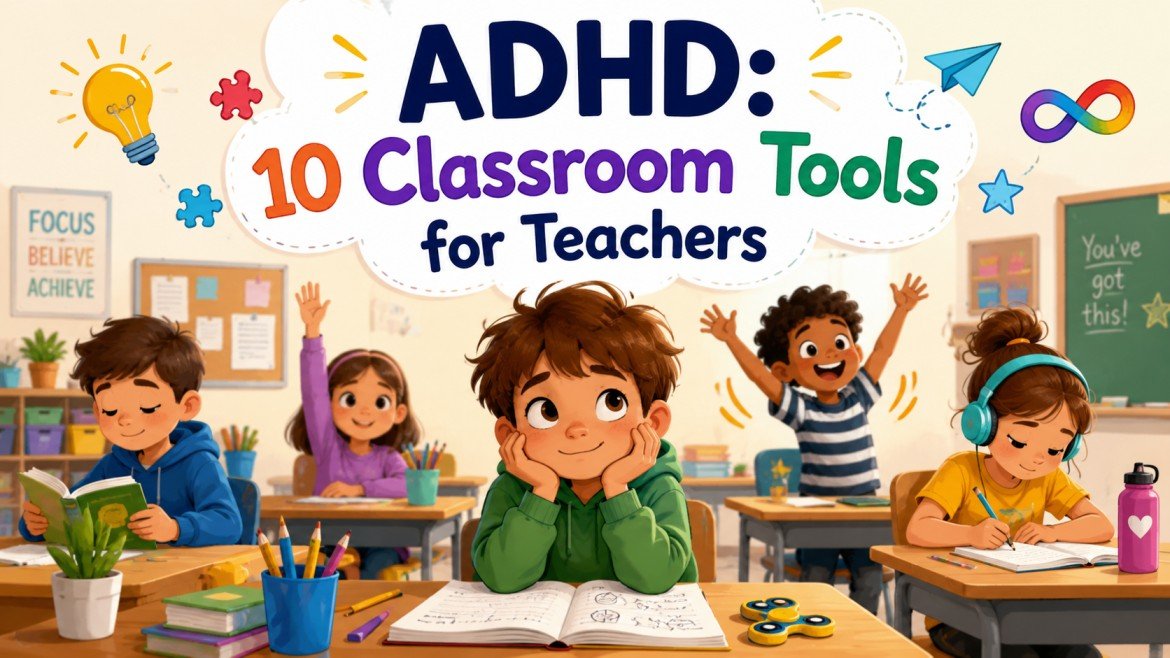
Attention Deficit Hyperactivity Disorder (ADHD) is a common neurodevelopmental condition that affects both children and adults, characterized by persistent patterns of inattention, hyperactivity, and impulsivity. It is a neurodevelopmental condition that affects a person’s ability to regulate attention, activity level, impulses, and self-control. Symptoms usually begin in childhood but may continue into adolescence and adulthood. ADHD is not a lack of intelligence or effort; it is a difference in how the brain regulates attention, impulses, and activity.
Characteristics of ADHD
ADHD symptoms are generally grouped into three main categories: Inattention, Hyperactivity, and Impulsivity.
Inattention
A child or adult with inattentive symptoms may:
- Have difficulty paying attention to details and make careless mistakes.
- Struggle to stay focused during tasks, conversations, or activities.
- Easily get distracted by surroundings, thoughts, or external stimuli.
- Have difficulty completing assignments or tasks.
- Frequently lose items such as books, stationery, keys, or personal belongings.
- Forget daily activities, instructions, or responsibilities.
- Avoid tasks that require prolonged mental effort.
- Have difficulty organizing work, time, or materials.
- Seem to not listen when spoken to directly.
- Frequently switch from one activity to another without completing tasks.
Hyperactivity
A child or adult with hyperactive symptoms may:
- Fidget with hands, feet, or objects frequently.
- Have difficulty sitting still for long periods.
- Feel restless or constantly “on the go.”
- Move around excessively in situations where it is expected to remain seated.
- Talk excessively.
- Find quiet activities difficult to engage in.
- Experience difficulty relaxing or slowing down.
Impulsivity
A person showing impulsive symptoms may:
- Act or respond without thinking about consequences.
- Interrupt conversations or activities.
- Have difficulty waiting for their turn.
- Answer questions before they are fully asked.
- Make quick decisions without considering outcomes.
- Struggle with controlling emotional reactions.
- Have difficulty following social rules during interactions.
Classroom Tools/ Strategies for Teachers
Visual Schedules
A visual schedule is a tool that uses pictures, symbols, words, or step-by-step cues to show what activities need to happen and in what order. For children with ADHD (Attention-Deficit/Hyperactivity Disorder), visual schedules provide structure, reduce confusion, improve focus, and support independence.
Children with ADHD often experience challenges with time management, organization, remembering instructions, and transitioning between activities. A visual schedule helps make daily routines more predictable and easier to follow.
Types of Visual Schedules for ADHD
| Type | Description | Example |
|---|---|---|
| Daily Schedule | Shows the complete routine of the day. | Wake up → Brush teeth → Breakfast → School → Homework → Play → Sleep |
| First–Then Schedule | Shows a preferred activity after completing a required task. | First: Finish homework → Then: Play video game |
| Task Sequence Schedule | Breaks one activity into smaller steps. | Pack school bag → Put books → Add lunch box → Keep bag near door |
| Weekly Schedule | Shows upcoming events and activities throughout the week. | Monday: School, Tuesday: Therapy, Wednesday: Sports |
| Choice Schedule | Provides limited options to encourage decision-making. | Choose: Drawing / Reading / Puzzle |
| Transition Schedule | Helps prepare children for changes between activities. | 5 minutes left → Clean up → Move to next activity |
Classroom Visual Schedule
| Time | Activity |
|---|---|
| 8:30 | Morning Greeting |
| 9:00 | Mathematics |
| 10:00 | Break Time |
| 10:30 | Reading Activity |
| 11:30 | Art Activity |
| 12:30 | Lunch |
| 1:00 | Pack Up & Go Home |
Fidget Toys
Fidget toys are small sensory tools designed to provide controlled movement and tactile stimulation. For children and adults with ADHD (Attention-Deficit/Hyperactivity Disorder), fidget toys may help channel excess energy, improve focus, and support self-regulation when used appropriately.
Many individuals with ADHD experience a need for movement while trying to concentrate. A fidget toy provides a quiet, purposeful movement that may help some learners maintain attention during tasks.
Types of Fidget Toys for ADHD
| Fidget Toy | How It Can Be Used |
|---|---|
| Fidget Spinner | Provides repetitive spinning movement for sensory regulation. |
| Stress Ball | Allows squeezing and releasing to manage tension and improve hand strength. |
| Pop It Toys | Provides repetitive pushing and tactile feedback. |
| Fidget Cube | Offers different movements like clicking, rolling, and switching. |
| Tangle Toys | Supports twisting and manipulation for sensory input. |
| Therapy Putty | Helps with squeezing, stretching, and strengthening hand muscles. |
| Fidget Rings | Provides quiet movement that can be used during learning or meetings. |
| Textured Objects | Provides different sensory experiences through touch. |
Using Fidget Toys Effectively in Classroom
| Do’s | Don’ts |
|---|---|
| Introduce the purpose of the fidget toy clearly. | Do not use it as a replacement for teaching strategies or support. |
| Choose a quiet and appropriate fidget tool. | Avoid toys that create distraction or noise. |
| Teach students when and how to use it. | Do not allow unlimited play during learning time. |
| Select tools based on individual sensory needs. | Avoid assuming every child with ADHD needs a fidget toy. |
| Monitor whether it improves attention and participation. | Stop using it if it becomes distracting. |
Fidget toys are support tools, not a treatment for ADHD. They may be helpful for some individuals, but their effectiveness depends on the child’s needs, the environment, and proper guidance.
Graphic Organizers
A graphic organizer is a visual learning tool that helps students arrange, connect, and understand information through diagrams, charts, maps, and structured formats. For children with ADHD (Attention-Deficit/Hyperactivity Disorder), graphic organizers reduce information overload, improve organization, and make learning more manageable.
Children with ADHD may experience difficulties with planning, organizing thoughts, remembering information, and completing complex tasks. Graphic organizers provide a visual structure that helps them process information step-by-step.
Types of Graphic Organizers for ADHD
| Graphic Organizer | Purpose | Example Use |
|---|---|---|
| Mind Map | Helps organize ideas around a central topic. | Brainstorming ideas for a story or project. |
| Flow Chart | Shows steps, processes, or sequences. | Understanding a science process or daily routine. |
| Venn Diagram | Helps compare similarities and differences. | Comparing two characters, concepts, or topics. |
| Story Map | Organizes elements of a story. | Identifying characters, setting, problem, and solution. |
| KWL Chart | Organizes learning before and after a lesson. | What I Know, What I Want to Know, What I Learned. |
| Sequence Chart | Helps arrange events in order. | Understanding historical events or instructions. |
| Cause and Effect Chart | Shows relationships between actions and results. | Understanding reasons and outcomes in science or social studies. |
| Checklist Organizer | Breaks tasks into smaller steps. | Completing assignments or preparing school bags. |
| T-Chart | Organizes information into two categories. | Comparing advantages and disadvantages. |
| Concept Map | Shows connections between ideas. | Understanding complex academic topics. |
Examples of Graphic Organizers for ADHD
Assignment Planning Organizer
| Task | Steps to Complete | Completed |
|---|---|---|
| Science Project | Research → Write Notes → Make Model → Submit | ☐ |
| Homework | Read Questions → Solve → Check Answers | ☐ |
Writing Organizer
Topic: My Favorite Animal
| Main Idea | Details |
|---|---|
| Name of Animal | __________ |
| Appearance | __________ |
| Food | __________ |
| Habitat | __________ |
| Interesting Facts | __________ |
Problem-Solving Organizer
| Problem | Possible Solutions | Best Choice |
|---|---|---|
| I forgot my homework | Make a reminder, pack bag at night | __________ |
Choice Boards
A choice board is a visual tool that provides students with a selection of activities or tasks from which they can choose. For children with ADHD (Attention-Deficit/Hyperactivity Disorder), choice boards support decision-making, motivation, independence, and engagement by giving them a sense of control over their learning.
Children with ADHD may struggle with attention, motivation, and task initiation. Providing structured choices helps reduce resistance and encourages active participation.
Types of Choice Boards for ADHD
| Type of Choice Board | Purpose | Example |
|---|---|---|
| Activity Choice Board | Allows students to choose different learning activities. | Read a book / Draw a picture / Complete a worksheet |
| Assignment Choice Board | Provides different ways to complete an assignment. | Write an answer / Create a poster / Make a presentation |
| Break Choice Board | Helps students select appropriate calming activities. | Deep breathing / Stretching / Quiet reading |
| Learning Style Choice Board | Allows students to demonstrate learning in different ways. | Writing / Speaking / Drawing / Creating a model |
| Reward Choice Board | Provides structured choices after completing tasks. | Play a game / Choose an activity / Listen to music |
Example of a Classroom Choice Board
Topic: Learning About Animals
| Option 1 | Option 2 | Option 3 |
|---|---|---|
| Draw your favourite animal and label its parts | Write 5 facts about an animal | Create a small animal model |
| Watch an educational video | Make animal flashcards | Explain an animal’s habitat |
Example: Homework Choice Board
Complete any 2 activities:
| Choice | Activity |
|---|---|
| ☐ | Solve 10 maths questions |
| ☐ | Create a maths game |
| ☐ | Explain a concept verbally |
| ☐ | Make a concept map |
| ☐ | Complete a practice worksheet |
Seating Options
Seating options are classroom arrangements designed to support students with ADHD (Attention-Deficit/Hyperactivity Disorder) by considering their needs for focus, movement, sensory regulation, and reduced distractions. The right seating arrangement can help students participate better, stay organized, and feel comfortable while learning.
Students with ADHD may benefit from seating that provides appropriate movement opportunities, clear visual access to instruction, and a supportive learning environment.
Different Seating Options for Students with ADHD
| Seating Option | Description | How It Helps |
|---|---|---|
| Front Row Seating | Student sits closer to the teacher and instructional area. | Reduces distractions and improves attention to instructions. |
| Preferential Seating | Student sits in a location chosen according to individual needs. | Provides better access to teaching and minimizes distractions. |
| Standing Desk | Allows students to stand while completing work. | Supports students who need movement while learning. |
| Wobble Cushion | A flexible cushion placed on a chair that allows small movements. | Provides sensory input while maintaining focus. |
| Stability Ball Chair | A large exercise-style ball used as a chair. | Allows controlled movement and improves body awareness. |
| Floor Seating Area | A designated space where students can sit on mats or cushions. | Provides an alternative learning position for some students. |
| Quiet Corner Seating | A low-distraction area for independent work. | Helps students who become overwhelmed by classroom stimuli. |
| Standing Workstation | A workspace where students can complete tasks while standing. | Supports students with high movement needs. |
| Study Carrel/Privacy Space | A partially enclosed workspace that reduces visual distractions. | Helps students focus during individual tasks. |
| Flexible Seating Arrangement | Classroom includes different seating choices instead of fixed desks. | Allows students to choose seating based on learning needs. |
Example of Flexible Seating Classroom
| Area | Purpose |
|---|---|
| Teacher Instruction Area | Direct teaching and group discussions |
| Quiet Work Zone | Independent tasks with fewer distractions |
| Collaboration Area | Group activities and peer learning |
| Movement Zone | Stretching or short movement breaks |
| Choice Seating Area | Students select suitable seating options |
Brain Breaks
Brain breaks are short periods of planned movement, relaxation, or sensory activities that allow students to pause from academic tasks and recharge their attention. For children with ADHD (Attention-Deficit/Hyperactivity Disorder), brain breaks can support focus, self-regulation, energy management, and classroom participation.
Students with ADHD often have difficulty maintaining attention for long periods. Short, purposeful breaks can help refresh the brain and prepare students to return to learning activities.
Types of Brain Breaks for ADHD
| Type of Brain Break | Examples | Purpose |
|---|---|---|
| Movement Breaks | Jumping jacks, stretching, dancing, walking, yoga poses | Helps release physical energy and improve alertness. |
| Breathing Breaks | Deep breathing, box breathing, mindful breathing | Supports calming and emotional regulation. |
| Sensory Breaks | Squeezing a stress ball, using sensory tools, pushing against a wall | Provides sensory input for self-regulation. |
| Mindfulness Breaks | Guided relaxation, visualization, quiet moments | Helps improve calmness and attention. |
| Creative Breaks | Drawing, doodling, colouring, music activities | Encourages relaxation and creativity. |
| Fun Activity Breaks | Quick games, movement challenges, action songs | Increases motivation and classroom engagement. |
Examples of Quick Brain Break Activities
| Activity | Duration |
|---|---|
| Stretch arms and legs while counting to 10 | 1 minute |
| Take 5 deep breaths | 1–2 minutes |
| Animal movements (walk like a bear, hop like a frog) | 2 minutes |
| Simon Says movement game | 3 minutes |
| Classroom dance/movement activity | 3–5 minutes |
| Wall push-ups | 1 minute |
| Spot the difference or quick puzzle activity | 2–3 minutes |
| Mindful listening to sounds around you | 2 minutes |
Movement Breaks
Movement breaks are short periods of physical activity provided during learning sessions to help students release energy, improve attention, and regulate their bodies. For students with ADHD (Attention-Deficit/Hyperactivity Disorder), movement breaks can support the brain’s need for physical activity while helping them return to academic tasks with improved focus.
Many students with ADHD experience difficulty sitting for long periods. Planned movement opportunities provide a structured way to meet this need without disrupting learning.
Types of Movement Breaks for ADHD
| Type of Movement Break | Examples | Purpose |
|---|---|---|
| Stretching Activities | Arm stretches, neck rolls, toe touches, body stretches | Helps relax muscles and improve alertness. |
| Gross Motor Activities | Jumping, hopping, running in place, animal walks | Helps release energy and improve coordination. |
| Cross-Lateral Movements | Touching opposite hand to knee, cross crawls | Supports coordination and body awareness. |
| Heavy Work Activities | Wall pushes, carrying books, chair pushes | Provides calming sensory input. |
| Balance Activities | Standing on one foot, balance poses, walking on a line | Improves concentration and body control. |
| Movement Games | Simon Says, Follow the Leader, Freeze Dance | Encourages listening, attention, and movement control. |
| Yoga-Based Movements | Simple yoga poses and breathing exercises | Supports relaxation and emotional regulation. |
Examples of Quick Movement Break Activities
| Activity | Duration |
|---|---|
| 10 jumping jacks | 1 minute |
| Walk around the classroom and return to seat | 2 minutes |
| Animal walks (bear walk, frog jumps, crab walk) | 3 minutes |
| Wall push-ups | 1 minute |
| Stretch and count to 20 | 2 minutes |
| Dance to a short song | 3–5 minutes |
| Balance challenge | 2 minutes |
| Movement imitation game | 3 minutes |
Positive Reinforcement Systems
Positive reinforcement systems are strategies that encourage desired behaviors by providing recognition, rewards, or positive feedback when students demonstrate appropriate behaviors or complete tasks. For students with ADHD (Attention-Deficit/Hyperactivity Disorder), positive reinforcement can help build motivation, improve self-control, and strengthen positive classroom behaviors.
Students with ADHD may experience challenges with attention, impulse control, organization, and task completion. A structured reinforcement system helps them understand expectations and experience success through achievable goals.
Types of Positive Reinforcement Systems for ADHD
| System | Description | Example |
|---|---|---|
| Token Economy System | Students earn tokens or points for positive behaviors that can later be exchanged for rewards. | Earn 5 stars → Choose a classroom activity |
| Reward Charts | Visual charts that track progress toward a goal. | Complete homework → Add a sticker |
| Behavior Contracts | A written agreement between student and teacher outlining goals and rewards. | “I will raise my hand before speaking.” |
| Praise and Recognition | Immediate verbal appreciation for specific behaviors. | “Great job waiting for your turn!” |
| Goal Setting System | Students work toward small, achievable targets. | Stay focused for 15 minutes → Earn a point |
| Privilege-Based Rewards | Students earn special responsibilities or choices. | Choose the classroom game or activity |
| Self-Monitoring Charts | Students track and reflect on their own behavior. | Did I complete my work? Did I follow instructions? |
Examples of Positive Reinforcement in Classroom
| Expected Behaviour | Positive Reinforcement Example |
|---|---|
| Completing assignments | “You completed your work on time. Great effort!” |
| Staying focused during a lesson | Earn a point or sticker for attention. |
| Following instructions | Give immediate specific praise. |
| Waiting for a turn | Recognize patience and self-control. |
| Organizing materials | Provide appreciation or reward points. |
| Participating appropriately | Encourage active involvement. |
Example: Classroom Token System
Student Goal: Complete independent work for 20 minutes.
| Positive Behavior | Points Earned |
|---|---|
| Starts work on time | ⭐ |
| Follows instructions | ⭐ |
| Completes task | ⭐ |
| Uses calm behavior | ⭐ |
5 Stars = Choose a preferred classroom activity
Break Reminders
Break reminders are visual, auditory, or digital cues that remind students to take planned short breaks during learning activities. For students with ADHD (Attention-Deficit/Hyperactivity Disorder), break reminders help manage attention, prevent mental fatigue, support self-regulation, and improve task completion.
Students with ADHD may find it challenging to recognize when they need a break or may become overwhelmed after sustained concentration. A structured reminder system helps them take breaks at the right time rather than waiting until frustration or distraction occurs.
Types of Break Reminders for ADHD
| Type of Reminder | Description | Example |
|---|---|---|
| Visual Timers | Shows the passage of time visually. | Sand timer, countdown timer, digital timer |
| Break Cards | A card that signals when it is time for a break. | “2-minute movement break” card |
| Schedule Reminders | Breaks included in daily routines. | Work → Break → Work |
| Alarm Reminders | Uses sounds or vibrations to signal break time. | Phone alarm, classroom timer |
| Visual Cues | Symbols or signs displayed in the classroom. | ⏸️ Break Time icon |
| Teacher Prompts | Teacher provides verbal reminders. | “You have worked for 20 minutes; let’s take a short break.” |
| Self-Monitoring Tools | Students track their own focus and break needs. | Focus checklist or break tracker |
Examples of Break Reminder Systems
1. Work–Break Schedule
| Activity | Duration |
|---|---|
| Mathematics Task | 20 minutes |
| Movement Break | 3 minutes |
| Reading Activity | 20 minutes |
| Relaxation Break | 5 minutes |
2. Visual Break Card
I am working → Timer finishes → Take a short break → Return to work
3. Focus Tracker
| Task | Completed |
|---|---|
| Focus for 15 minutes | ✅ |
| Take a 3-minute break | ✅ |
| Return to task | ✅ |
Break Ideas After Reminder
| Type of Break | Activity Examples |
|---|---|
| Movement Break | Stretching, walking, jumping, yoga |
| Sensory Break | Stress ball, fidget tool, deep pressure activities |
| Calming Break | Deep breathing, quiet corner, mindfulness |
| Creative Break | Drawing, colouring, music |
| Refresh Break | Drinking water, organizing materials |
Self-Monitoring Tools
Self-monitoring tools are strategies that help students observe, track, and reflect on their own behavior, attention, emotions, and task completion. For students with ADHD (Attention-Deficit/Hyperactivity Disorder), these tools encourage self-awareness, independence, organization, and self-regulation.
Students with ADHD may find it difficult to notice when they are distracted, losing focus, or struggling with a task. Self-monitoring tools help them become active participants in managing their own learning and behavior.
Types of Self-Monitoring Tools for ADHD
| Tool | Description | Example |
|---|---|---|
| Self-Monitoring Checklist | A simple checklist to track completion of tasks or behaviors. | ☐ I brought my books ☐ I completed my work |
| Behavior Rating Scale | Students rate their own behavior or attention level. | ⭐ I stayed focused: 1 2 3 4 5 |
| Daily Goal Sheet | Helps students set and review personal goals. | “Today I will complete my assignment on time.” |
| Task Completion Tracker | Tracks progress on assignments or activities. | Completed tasks: 3/5 |
| Focus Tracker | Helps students monitor attention during learning. | Focused ✅ Distracted ❌ Back on task ✅ |
| Emotion Check-In Chart | Helps students identify feelings and emotional needs. | 😊 Calm 😐 Okay 😟 Need a break |
| Time Management Planner | Helps organize activities and deadlines. | Homework schedule, study plan |
| Reflection Journal | Encourages students to reflect on their learning and behavior. | “What went well today? What can I improve?” |
| Point or Token Tracker | Allows students to monitor progress toward goals. | Earn points for completing tasks |
| Visual Progress Chart | Displays progress in a simple visual format. | Sticker chart or progress bar |
Examples of Self-Monitoring Tools
1. Attention Self-Check
| Question | Yes | Sometimes | No |
|---|---|---|---|
| Did I listen to instructions? | ☐ | ☐ | ☐ |
| Did I stay on my task? | ☐ | ☐ | ☐ |
| Did I ask for help when needed? | ☐ | ☐ | ☐ |
2. Homework Self-Monitoring Checklist
| Task | Completed |
|---|---|
| I wrote my homework correctly | ☐ |
| I packed the required materials | ☐ |
| I completed my assignment | ☐ |
| I checked my work | ☐ |
3. Emotion Regulation Check-In
How do I feel right now?
😊 Ready to learn
😐 Need a small break
😟 Feeling overwhelmed
😡 Need help to calm down
Supporting students with ADHD is not about changing who they are; it is about creating an environment where they can learn, participate, and succeed. Every child has unique strengths, learning preferences, and ways of engaging with the world.
Classroom tools such as visual schedules, fidget tools, graphic organizers, choice boards, movement breaks, positive reinforcement systems, seating options, and self-monitoring strategies help teachers create structured yet flexible learning spaces where students feel supported.
The goal is not to eliminate movement, curiosity, or creativity — but to channel these qualities in meaningful ways. When teachers understand ADHD and use supportive strategies, students can develop confidence, independence, and a positive attitude toward learning.
An inclusive classroom is not one where every student learns the same way; it is one where every student gets the support they need to reach their potential.
“When we understand the learner behind the behavior, we create opportunities for every child to succeed.”