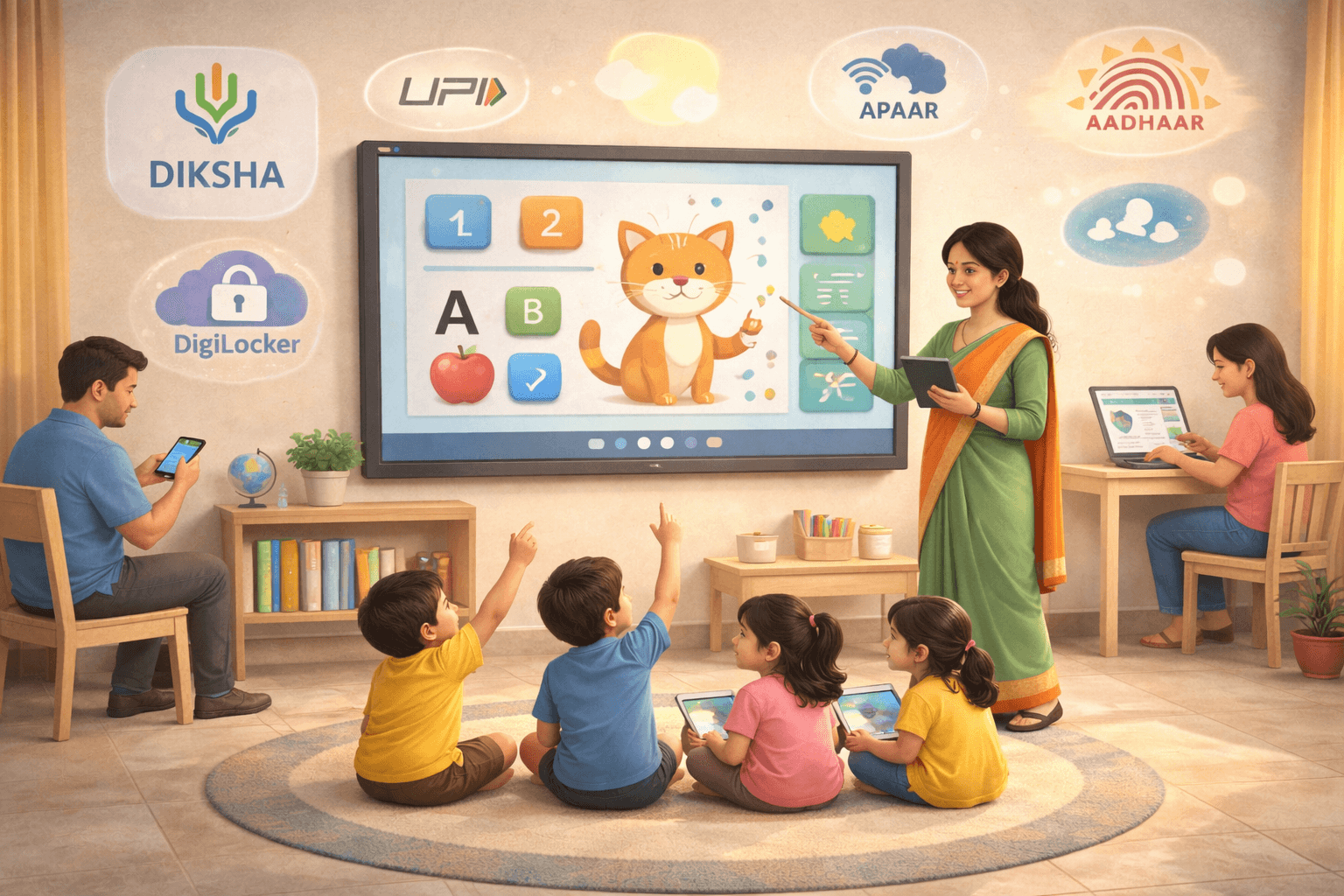
Digital India begins in the preparatory classroom, where children take their first steps into structured learning. At this stage, teachers play a vital role in building digital awareness, promoting safe practices, and using technology meaningfully for learning and parent communication. Government initiatives such as DIKSHA, UPI, APAAR, DigiLocker, and Aadhaar support teachers and families by making education systems more accessible, organised, and efficient. By understanding and responsibly using these tools, educators help lay a strong foundation for children to grow confidently in an increasingly digital world.
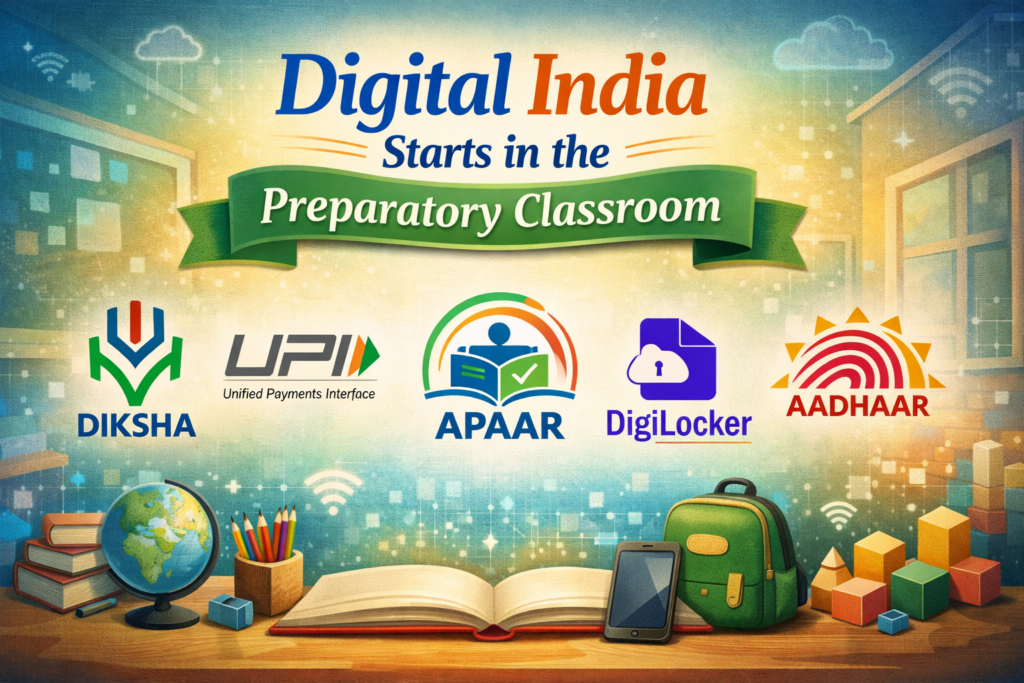
DIKSHA ( Digital Infrastructure for Knowledge Sharing)
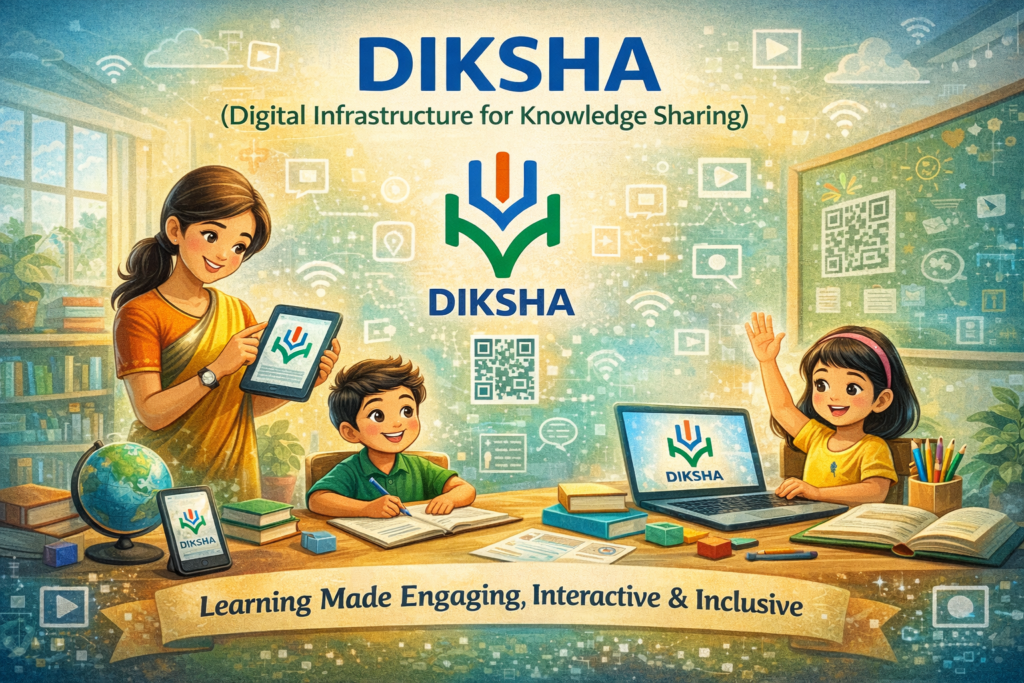
DIKSHA is a national digital platform developed to support teachers, students, and schools by providing easy access to quality educational resources. It offers digital textbooks, teaching–learning materials, videos, worksheets, assessments, and teacher training modules aligned with national curriculum frameworks.
For preparatory stage teachers, DIKSHA supports lesson planning, professional development, and the use of age-appropriate digital resources to make learning more engaging, inclusive, and effective.
Key Features of DIKSHA
- Access to free, high-quality digital content anytime and anywhere
- Resources aligned with NCF, SCERT, and NCERT guidelines
- Teacher training and professional development courses
- Content available in multiple Indian languages
- QR-code based access linked to textbooks
- User-friendly platform for teachers, students, and parents
Digital Content Available on DIKSHA
DIKSHA offers a wide variety of digital learning materials, including:
- Interactive videos and animations
- Digital textbooks and e-books
- Worksheets and practice activities
- Quizzes and assessment tools
- Audio stories, rhymes, and read-along content
- Teacher manuals and classroom activity ideas
This variety allows teachers to choose resources that match the learning level, pace, and interests of preparatory-stage children.
Content Areas Teachers Can Find on DIKSHA
Teachers can find digital resources related to:
- Early literacy and numeracy
- Language development
- Environmental studies
- Art, music, and movement
- Life skills and social-emotional learning
- Inclusive education and foundational learning
- Teacher training and classroom management
Bridging the Physical and Digital Classroom
One of DIKSHA’s most powerful features is its ability to bridge physical textbooks with digital learning through energised textbooks. By scanning QR codes printed in textbooks, teachers and parents can instantly access related digital content such as videos, activities, and explanations.
This integration helps:
- Reinforce classroom learning at home
- Support different learning styles
- Make textbooks more interactive and meaningful
- Connect traditional teaching with digital support
Through DIKSHA, teachers are empowered to combine hands-on classroom experiences with digital enrichment, ensuring that technology enhances learning without replacing the teacher’s role.
UPI (Unified Payments Interface)
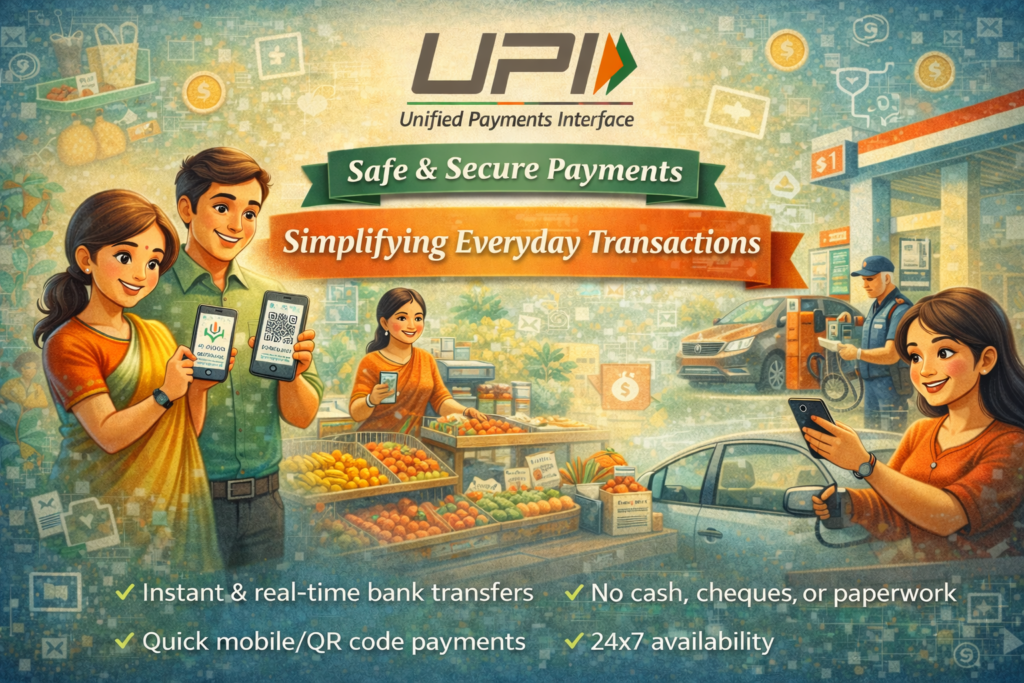
UPI is a digital payment system developed to make money transfers simple, fast, and secure using mobile phones. It allows users to send and receive money directly between bank accounts without the need for cash, cards, or complex bank details.
In the school and preparatory education context, UPI supports smoother financial communication between schools and families, reducing paperwork and saving time.
Key Features of UPI
- Instant bank-to-bank transfers
- Works 24×7, including weekends and holidays
- Requires only a mobile number or UPI ID
- Secure transactions with PIN-based authentication
- Accepted across multiple apps and banks
- Reduces dependency on cash and cheques
How UPI Supports Schools and Families
Through UPI, schools and parents can:
- Pay school fees easily and on time
- Make payments for learning materials, activities, and resources
- Maintain transparent and trackable transactions
- Reduce the need for physical receipts and cash handling
- Support eco-friendly, paper-less processes
Why UPI Matters for Teachers
Although children at the preparatory stage do not use UPI directly, teachers benefit from:
- Smoother coordination with parents for payments and reimbursements
- Reduced administrative burden
- Clear records of transactions when linked with school systems
- Encouraging families to adopt safe and responsible digital practices
UPI strengthens the connection between education and digital responsibility by making everyday school-related processes efficient, secure, and accessible for all families.
APAAR (Automated Permanent Academic Account Registry)
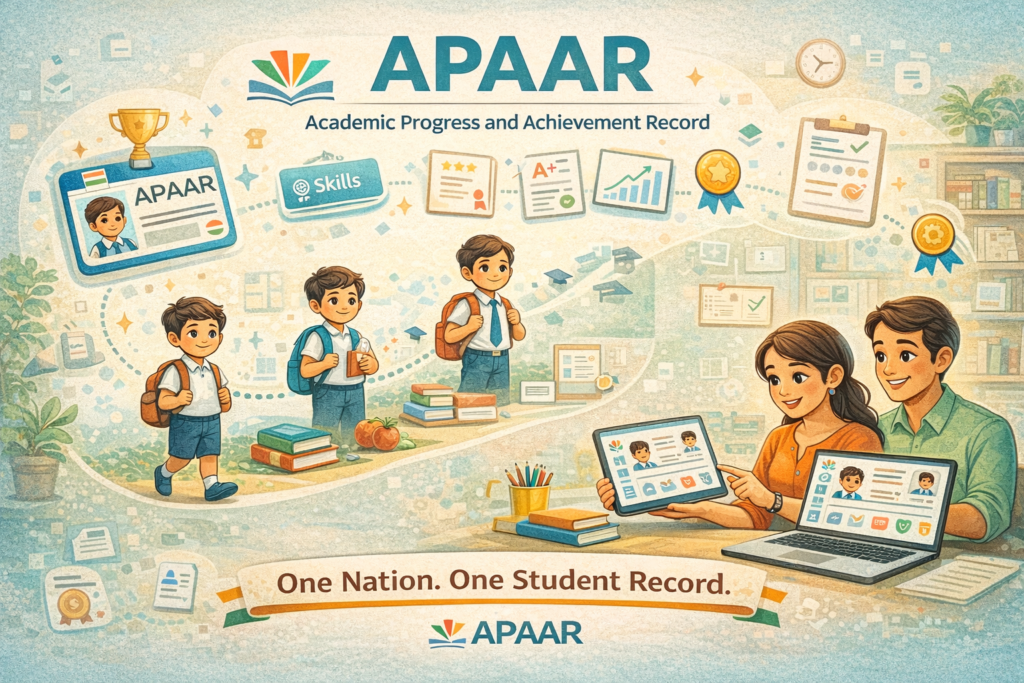
APAAR is a national initiative aimed at creating a unique academic identity for every student in India. It helps in maintaining a secure, organised, and lifelong record of a student’s academic journey, starting from the early years of schooling and continuing through higher education.
In the context of preparatory education, APAAR supports better record-keeping and continuity as children move across classes, schools, and education systems.
Key Features of APAAR
- Provides a unique academic ID for each student
- Creates a digital record of academic progress
- Helps track learning milestones across years
- Supports seamless transfer of records between schools
- Reduces duplication and paperwork
- Ensures data security and authenticity
Why APAAR is Important for Preparatory Stage Teachers
For teachers working with young children, APAAR helps:
- Maintain consistent and accurate student records
- Support smoother transitions between classes and schools
- Track early learning progress and developmental milestones
- Coordinate better with parents and school authorities
- Reduce administrative burden related to academic documentation
How APAAR Supports Families
APAAR helps parents by:
- Keeping academic records centralised and organised
- Reducing the stress of managing physical documents
- Ensuring continuity in a child’s learning journey
- Making school-related processes more transparent
Although young children may not directly engage with APAAR, teachers and parents play a key role in understanding and using this system responsibly. APAAR strengthens the foundation of Digital India in education by ensuring that every child’s learning journey is recorded, protected, and supported from the very beginning.
DigiLocker
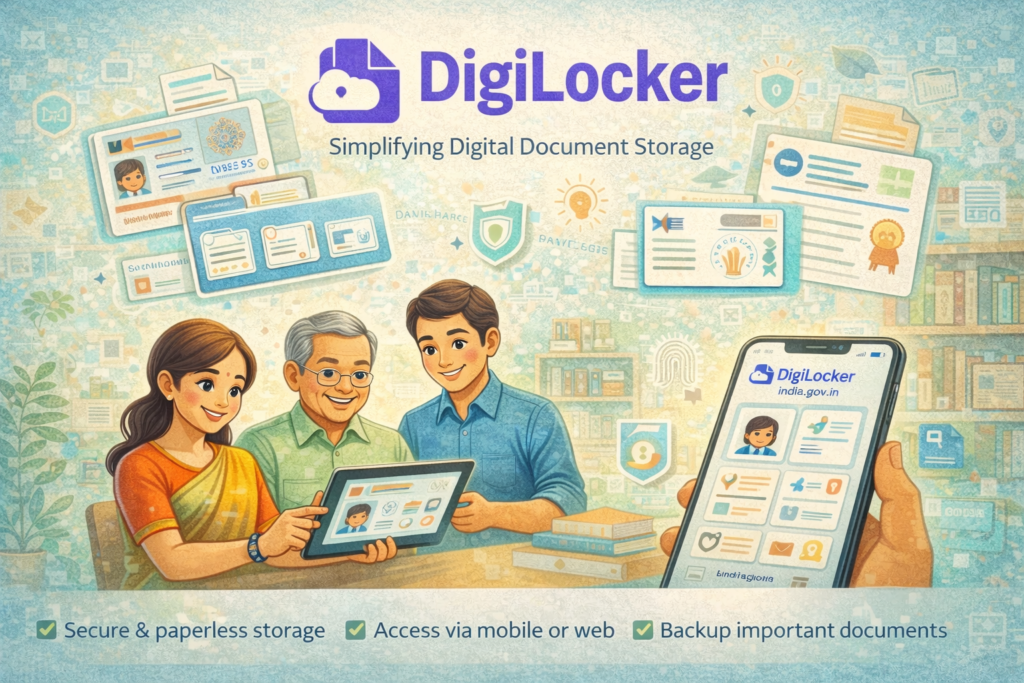
DigiLocker is a secure digital platform introduced by the Government of India to store, access, and share important documents online. It reduces the need to carry physical documents and helps families and institutions manage records safely in digital form.
In the context of education, DigiLocker plays an important role in organising student and school-related documents, making processes smoother for teachers, parents, and schools.
Key Features of DigiLocker
- Secure cloud-based storage for important documents
- Easy access to documents anytime, anywhere
- Reduces dependence on physical paperwork
- Allows sharing of documents digitally with authorised institutions
- Government-issued documents are verified and authentic
- Linked with Aadhaar for secure access
How DigiLocker Supports Schools and Teachers
For teachers and school staff, DigiLocker helps:
- Manage student-related documents efficiently and securely
- Reduce administrative workload and paper handling
- Access verified documents when required for school processes
- Support smoother admissions, transfers, and verifications
- Encourage organised and transparent record management
How DigiLocker Supports Parents
DigiLocker helps parents by:
- Safely storing important documents such as identity, certificates, and academic records
- Reducing the risk of document loss or damage
- Making school-related submissions quick and stress-free
- Supporting digital documentation required by schools and authorities
Although preparatory-stage children do not directly use DigiLocker, teachers and parents interact with it regularly. Understanding DigiLocker enables educators to guide families confidently and promote responsible digital practices as part of the Digital India mission.
Aadhaar
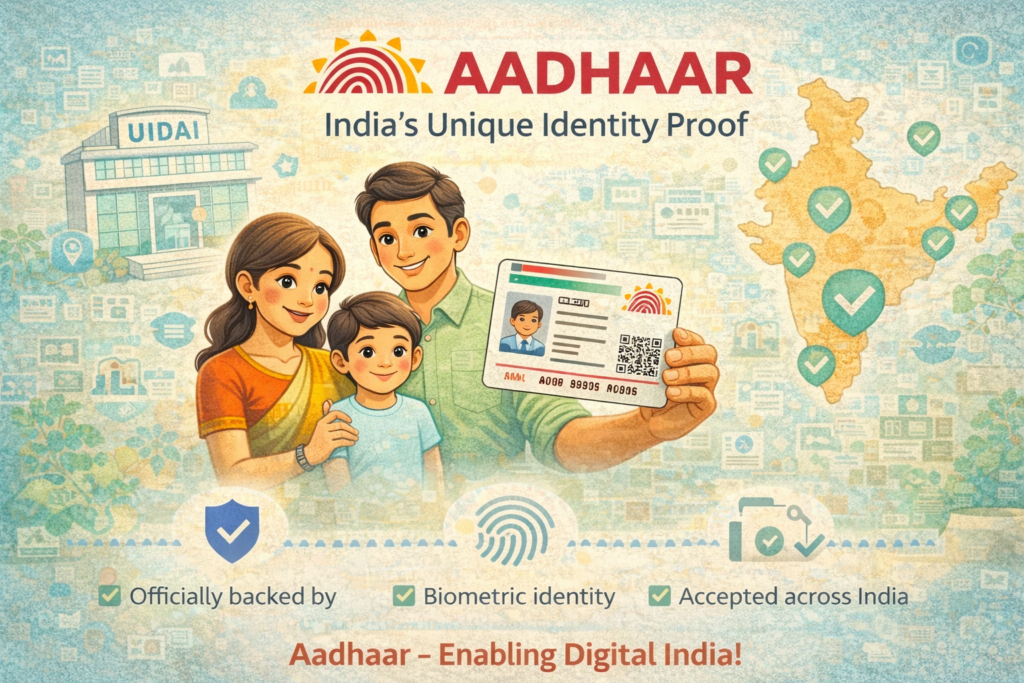
Aadhaar is a unique identity system issued by the Government of India that provides every resident with a 12-digit identification number based on biometric and demographic information. It serves as a foundational identity that helps individuals access various educational, social, and digital services.
In the education context, Aadhaar supports accurate identification and smooth access to multiple Digital India platforms used by schools and families.
Key Features of Aadhaar
- Provides a unique and verifiable identity
- Linked with biometric and demographic details
- Helps ensure authenticity and accuracy of records
- Used across multiple government and digital platforms
- Supports paper-less and digital processes
- Enhances transparency and accountability
Why Aadhaar Matters in Education
For schools and educators, Aadhaar helps to:
- Support accurate student identification
- Enable access to platforms such as DIKSHA, DigiLocker, and APAAR
- Reduce duplication and errors in records
- Streamline documentation and verification processes
- Strengthen coordination between schools, parents, and systems
Aadhaar and Preparatory Stage Children
Although young children may not actively use Aadhaar themselves, it is often required for:
- School documentation and verification
- Access to digital education platforms
- Linking academic and identity records securely
Teachers play an important role in guiding parents, explaining the purpose of Aadhaar, and ensuring its responsible and appropriate use within educational settings.
By supporting reliable identification and digital integration, Aadhaar strengthens the foundation of Digital India in education, making systems more accessible, organised, and secure for families and schools alike.
By understanding platforms like DIKSHA, UPI, APAAR, DigiLocker, and Aadhaar, teachers are better equipped to support children and families in a digitally connected education system. Digital readiness at the preparatory stage builds strong foundations for lifelong learning.